A Clear, Evidence-Based Look at the Most Influential Book in History
Why This Question Matters?
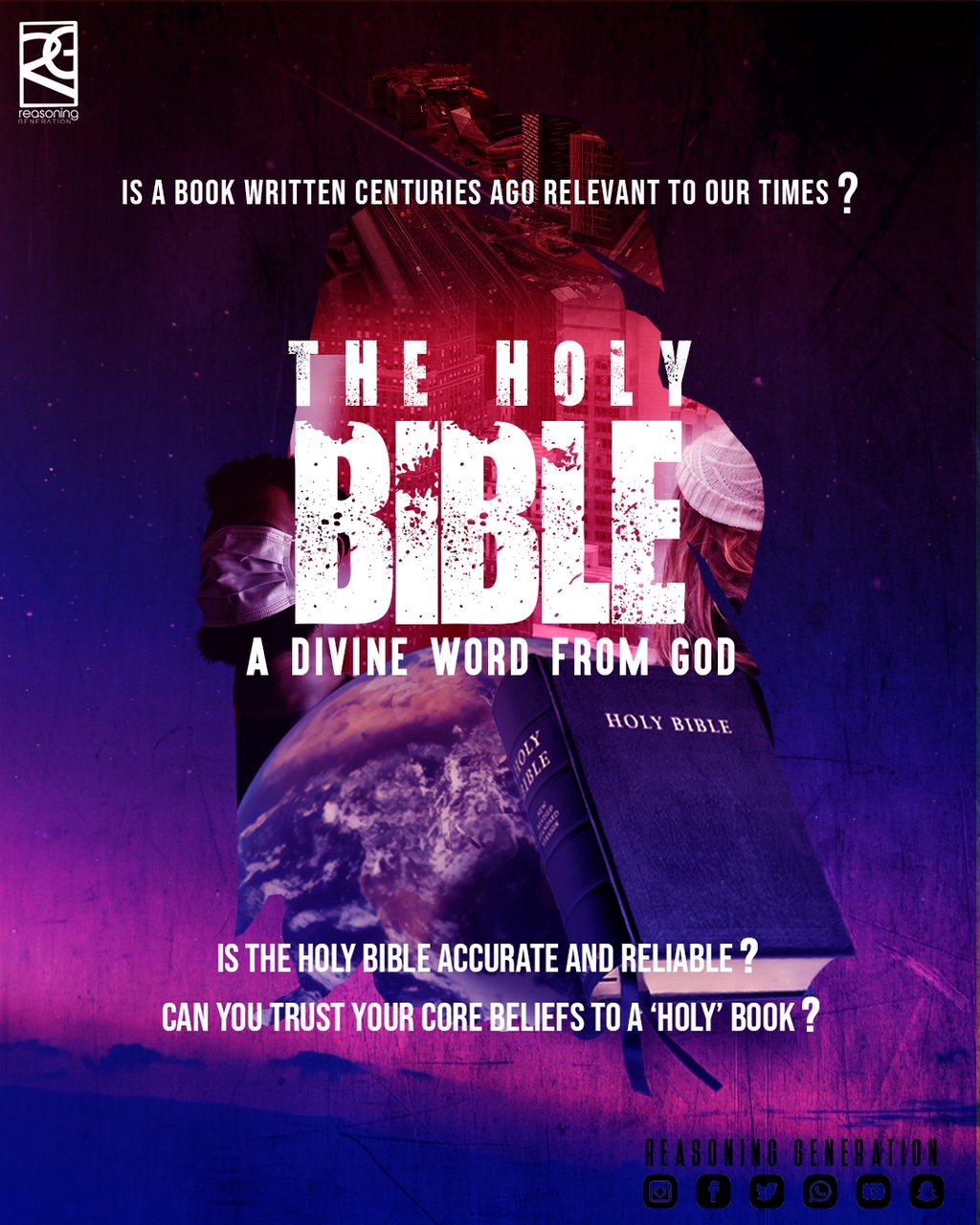
Have you ever wondered:
-
Can the Bible really be trusted?
-
Is it still relevant in the 21st century?
-
Could a book written thousands of years ago actually be the very Word of God?
These aren’t small questions. They affect how we see life, death, and eternity.
If our core beliefs stand or fall on the reliability of Scripture, we must ask: Is the Bible true?
What Exactly Is the Bible?
The Bible isn’t a single book — it’s a collection of writings that together tell one unified story.
-
66 Books – Written by 40 different authors over 1,500 years on three continents in three languages.
-
One Theme – God’s plan for humanity’s redemption through Jesus Christ.
-
Two Parts:
-
Old Testament (OT): Creation, God’s covenant with Israel, history, poetry, wisdom, and prophecy.
-
New Testament (NT): The life of Jesus (Gospels) and teachings on Christian living (Letters).
-
-
Unique Claim: While many sacred texts are human reflections on God, the Bible claims to be direct revelation from God.
Pause & Think: How could dozens of authors, across centuries and cultures, produce such a unified message unless there was a single divine Author behind it?
Is the Bible Accurate?
Manuscript Reliability
-
Old Testament: The Hebrew Scriptures were carefully preserved by scribes. In 1947, the Dead Sea Scrolls (dating to 125 BC) confirmed that our modern Old Testament matches ancient copies with remarkable accuracy.
-
New Testament: Written by eyewitnesses or their close companions. We have over 24,000 ancient manuscripts with a 99.5% accuracy rate — far more than any other ancient work.
Comparison:
-
Plato’s Republic – 7 copies, gap of 1,200 years
-
Homer’s Iliad – 643 copies, gap of 500 years
-
New Testament – 24,000 copies, gap of less than 100 years
Pause & Think: If historians trust the Iliad, how much more should we trust the New Testament?
Historical Evidence
Independent, non-Christian historians wrote about events and people in the Bible:
-
Flavius Josephus – Jewish historian who recorded the death of Herod the Great and mentioned Jesus.
-
Cornelius Tacitus – Roman historian who wrote about Jesus’ crucifixion under Pontius Pilate.
-
Pliny the Younger – Roman governor who described early Christians’ worship of Jesus as God.
-
Philo of Alexandria – Wrote about the trial of Jesus.
-
Gaius Suetonius – Mentioned census events under Roman emperors matching biblical accounts.
-
Phlegon of Tralles – Recorded the unusual darkness during Jesus’ crucifixion.
Archaeological Evidence
Archaeology continually confirms the Bible’s historical accuracy:
-
Babylonian Chronicles – Record Nebuchadnezzar’s invasion of Jerusalem (605–594 BC).
-
Lachish Letters – Desperate pleas before Babylon’s attack.
-
Ebla Tablets – Contain biblical place names like Sodom, Jerusalem, and Hazor.
-
Caiaphas Ossuary (1990) – Limestone box holding the remains of the high priest from Jesus’ trial.
-
Quirinius Census Record – Matches the census mentioned in Luke’s Gospel.
Did you know? 93% of the biblical locations have been identified and confirmed on modern maps.
Prophecy Fulfilled
The Bible contains around 2,500 prophecies — 2,000 have already been fulfilled with stunning precision.
Examples include:
-
The rise and fall of empires (Babylon, Persia, Greece, Rome)
-
The birth, life, and death of Jesus foretold in the OT centuries before He came
-
The regathering of Israel as a nation (fulfilled in 1948)
Pause & Think: If the first 2,000 prophecies came true, what does that say about the remaining ones?
Is the Bible Scientifically Credible?
Long before modern science, the Bible accurately described:
-
The Earth as round (Isaiah 40:22)
-
The water cycle (Ecclesiastes 1:7)
-
Health and sanitation principles later adopted in medicine
-
A universe with a beginning (Genesis 1:1)
Many scientists, including Isaac Newton, Blaise Pascal, and Michael Faraday, saw no conflict between science and Scripture.
Why This Matters to You
The Bible isn’t just a historical or scientific document — it’s a personal message from God to you.
It reveals:
-
God’s love for humanity
-
Our problem — sin separates us from Him
-
God’s solution — Jesus Christ’s death and resurrection
Jesus said: “I am the Way, the Truth, and the Life. No one comes to the Father except through Me.” (John 14:6)
Believing the Bible is not about blind faith — it’s about informed trust based on overwhelming evidence.
What Should You Do Now?
If the Bible is accurate, reliable, and truly the Word of God, then its message demands a response.
Dear Friend, the Bible is God’s written revelation, complementing His revelation through creation. Every word is true and will be fulfilled. Its core message is that God is loving, merciful, and kind toward all His creation.
When God created mankind, He made us in His image — perfect and without fault — but with the gift of free will. Sadly, humanity chose disobedience, creating separation from our holy Creator (Genesis). The truth is, we are all sinners and one day will stand before God. The penalty for sin is eternal death in hell.
But God, in His mercy, made a way. He came to earth as Jesus Christ to reconcile us to Himself. On the cross, Jesus paid our debt in full, removing sin’s penalty and offering the gift of eternal life to all who believe.
Jesus said: “I am the Way, the Truth, and the Life. No one comes to the Father except through Me.” (John 14:6) He is the only way to God, the only true God, and the only giver of eternal life.
Just as the Old Testament foretold His birth and death, the New Testament foretells His Second Coming. When He returns, only those who have believed in His Name will spend eternity in heaven with Him.
Jesus is coming again soon. The signs of His return are unfolding even now.
“Seek the Lord while He may be found; call on Him while He is near.” (Isaiah 55:6)
“Salvation is found in no one else, for there is no other name under heaven given to mankind by which we must be saved.” (Acts 4:12)

